
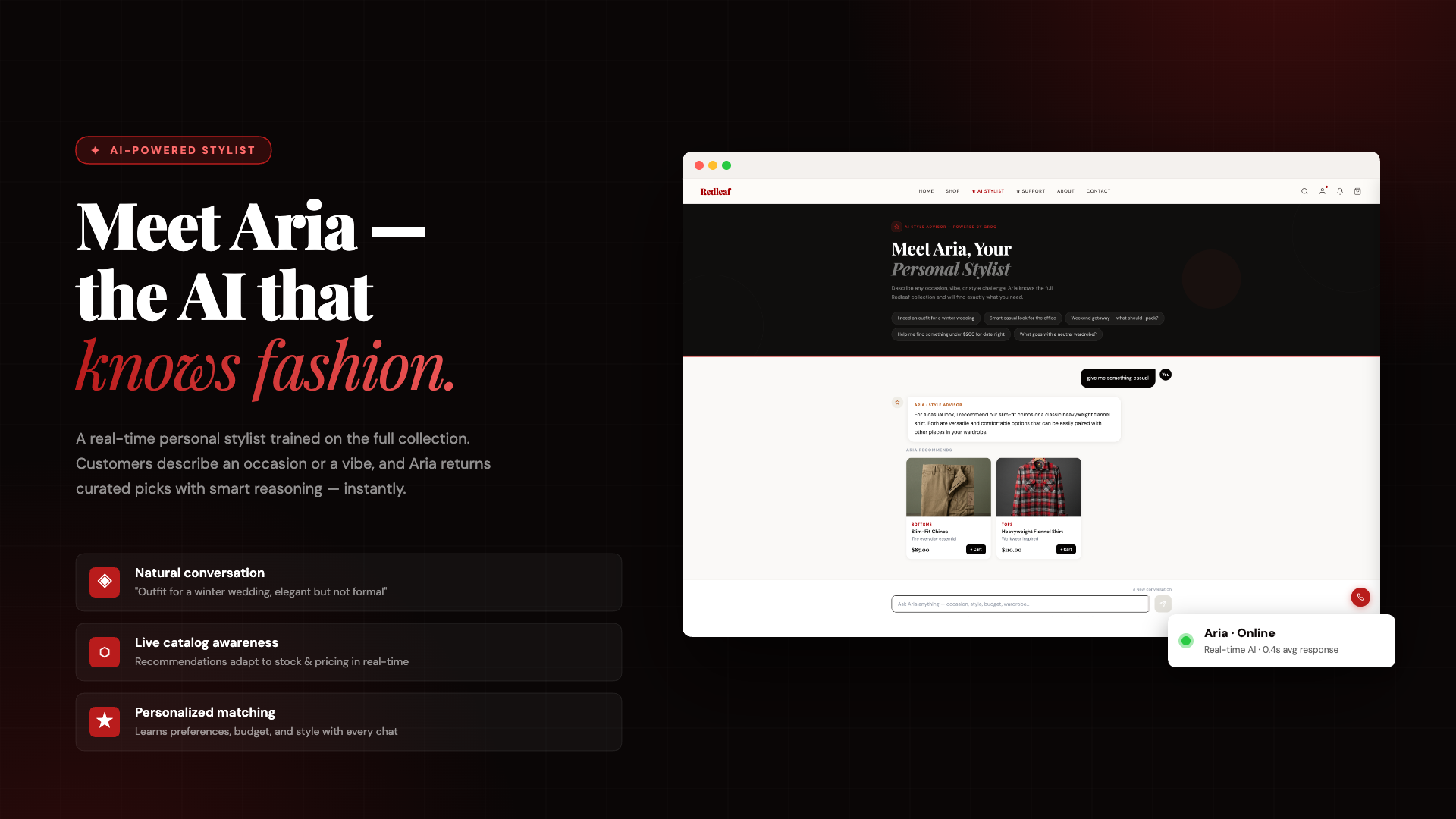
title: "AI-Powered Ecommerce: How Artificial Intelligence Is Transforming Online Shopping in 2026" description: "Discover how AI is revolutionizing ecommerce through personalized shopping experiences, intelligent customer support, dynamic pricing, inventory forecasting, and automated marketing." author: "Foxmen Studio" date: "2026-07-17" tags: - AI - Ecommerce - Artificial Intelligence - Online Business - Digital Transformation - Customer Experience
AI-Powered Ecommerce: How Artificial Intelligence Is Transforming Online Shopping in 2026
The ecommerce industry has evolved far beyond simply listing products online. Today's customers expect personalized recommendations, instant support, fast delivery, and seamless shopping experiences. Meeting these expectations manually is becoming nearly impossible.
Artificial Intelligence (AI) has emerged as the driving force behind modern ecommerce, helping businesses automate operations, understand customer behavior, and increase sales while reducing costs.
Whether you're running a startup, a growing online store, or a large marketplace, AI is no longer a luxury—it's becoming a competitive necessity.
What Is AI-Powered Ecommerce?
AI-powered ecommerce refers to the use of artificial intelligence technologies—including machine learning, natural language processing, computer vision, and predictive analytics—to improve every aspect of an online store.
Instead of relying solely on manual decision-making, AI continuously analyzes customer behavior, purchasing patterns, and business data to make smarter decisions in real time.
Examples include:
- Personalized product recommendations
- AI chatbots and virtual assistants
- Smart inventory forecasting
- Dynamic pricing
- Fraud detection
- Automated marketing campaigns
- Visual product search
- AI-generated product content
Why AI Matters in Ecommerce
Consumers today have countless shopping options. If your website isn't fast, personalized, and convenient, customers will likely leave within seconds.
AI helps businesses:
- Increase conversion rates
- Improve customer satisfaction
- Reduce operational costs
- Automate repetitive tasks
- Make better business decisions
- Boost customer retention
- Optimize marketing spend
Companies using AI effectively often experience higher revenue while spending less time on manual processes.
Personalized Shopping Experiences
One of AI's greatest strengths is personalization.
Instead of showing every visitor the same products, AI analyzes:
- Browsing history
- Purchase history
- Search behavior
- Device usage
- Geographic location
- Shopping preferences
It then recommends products that each customer is most likely to purchase.
Example
A customer frequently buys fitness equipment.
Instead of displaying random homepage products, the AI recommends:
- Protein supplements
- Smart watches
- Running shoes
- Resistance bands
- Workout clothing
This significantly increases the likelihood of another purchase.
Intelligent Product Recommendations
Recommendation engines have become one of the highest-performing AI features in ecommerce.
You'll commonly see sections like:
- Customers Also Bought
- Recommended For You
- Frequently Bought Together
- Similar Products
These recommendations are generated using machine learning algorithms rather than manual product grouping.
Benefits include:
- Higher average order value
- More cross-selling
- Better upselling
- Increased customer engagement
AI Chatbots That Never Sleep
Customer support is one of the biggest operational costs for ecommerce businesses.
AI chatbots now provide:
- 24/7 customer support
- Order tracking
- Product recommendations
- Return information
- Shipping updates
- Frequently asked questions
Unlike traditional chatbots with scripted responses, modern AI assistants understand natural language and can hold meaningful conversations.
This improves customer satisfaction while reducing support workload.
Visual Search Technology
Many shoppers struggle to describe what they're looking for.
AI-powered visual search solves this problem.
Customers simply upload an image, and AI finds visually similar products.
Examples include:
- Fashion
- Furniture
- Home décor
- Shoes
- Jewelry
This creates a faster and more intuitive shopping experience.
Smarter Inventory Management
Running out of stock costs sales.
Holding too much inventory wastes money.
AI helps businesses forecast demand using:
- Historical sales
- Seasonal trends
- Marketing campaigns
- Weather
- Holidays
- Economic patterns
Instead of guessing inventory needs, businesses can make data-driven purchasing decisions.
Dynamic Pricing
Pricing has become increasingly competitive.
AI continuously monitors:
- Competitor prices
- Demand
- Inventory levels
- Customer behavior
- Market conditions
It can automatically adjust prices to maximize profit while remaining competitive.
Dynamic pricing is widely used across:
- Retail
- Airlines
- Hotels
- Food delivery
- Online marketplaces
AI for Marketing Automation
Marketing generates massive amounts of data.
AI helps businesses automatically optimize:
- Email campaigns
- Product recommendations
- Customer segmentation
- Ad targeting
- Social media content
- Promotional timing
Instead of sending identical promotions to everyone, AI delivers personalized marketing based on customer interests.
The result:
- Higher click-through rates
- Better conversions
- Lower advertising costs
Predictive Analytics
One of AI's most valuable capabilities is predicting future behavior.
Businesses can identify:
- Customers likely to purchase
- Customers likely to churn
- Best-selling products
- Future demand
- Seasonal trends
- High-value customers
These insights allow companies to make proactive decisions instead of reacting after problems occur.
Fraud Detection
Online fraud continues to rise.
AI systems monitor transactions in real time and detect unusual patterns, including:
- Suspicious payment behavior
- Fake accounts
- Stolen credit cards
- Account takeovers
- Unusual purchasing locations
Machine learning continuously improves fraud detection without blocking legitimate customers.
AI-Generated Product Content
Creating descriptions for thousands of products can take weeks.
AI can generate:
- Product titles
- SEO descriptions
- Specifications
- Feature lists
- Marketing copy
- Meta descriptions
Human review is still recommended, but AI dramatically speeds up content production.
Voice Commerce
Voice assistants are changing how people shop.
Customers increasingly use voice commands like:
"Order my favorite coffee."
or
"Find black running shoes under $100."
AI enables ecommerce platforms to understand spoken language and recommend relevant products instantly.
Benefits of AI-Powered Ecommerce
Businesses implementing AI often experience:
- Increased sales
- Higher conversion rates
- Improved customer loyalty
- Better inventory control
- Faster customer service
- Lower operational costs
- More accurate forecasting
- Smarter marketing decisions
The combination of automation and data-driven decision-making creates significant long-term competitive advantages.
Challenges to Consider
Despite its benefits, AI implementation comes with challenges.
Data Quality
AI is only as effective as the data it receives.
Poor-quality customer or inventory data can produce inaccurate predictions.
Privacy
Businesses must handle customer information responsibly and comply with privacy regulations.
Transparency builds customer trust.
Implementation Cost
While AI tools are becoming more affordable, advanced enterprise solutions still require investment.
Fortunately, many cloud-based AI platforms now offer scalable pricing suitable for small businesses.
Human Oversight
AI should enhance human decision-making—not replace it entirely.
Human expertise remains essential for:
- Business strategy
- Customer relationships
- Brand identity
- Ethical decisions
- Quality assurance
The most successful companies combine AI efficiency with human creativity.
The Future of AI in Ecommerce
The next generation of ecommerce will become increasingly intelligent.
Emerging technologies include:
- AI shopping assistants
- Autonomous customer service agents
- Hyper-personalized storefronts
- Predictive purchasing
- AI-generated product photography
- Virtual try-on experiences
- Augmented reality shopping
- Fully automated ecommerce operations
As AI continues to evolve, online shopping will become faster, more personalized, and more intuitive than ever before.
Final Thoughts
Artificial Intelligence is no longer a futuristic concept—it's a practical tool reshaping the ecommerce landscape today.
From personalized recommendations and intelligent chatbots to inventory optimization and predictive analytics, AI empowers businesses to deliver exceptional customer experiences while operating more efficiently.
Organizations that embrace AI today will be better positioned to adapt to changing customer expectations, outperform competitors, and build sustainable growth in the years ahead.
For businesses looking to scale, AI isn't just another technology investment—it's becoming the foundation of modern ecommerce success.
Key Takeaways
- AI personalizes shopping experiences for every customer.
- Recommendation engines significantly improve sales.
- AI chatbots provide 24/7 customer support.
- Predictive analytics enables smarter business decisions.
- Dynamic pricing helps maximize profitability.
- AI improves inventory forecasting and supply chain efficiency.
- Marketing automation increases campaign performance.
- Fraud detection protects businesses and customers.
- Human oversight remains essential for responsible AI adoption.
- AI-powered ecommerce is rapidly becoming the industry standard.
Ready to transform your ecommerce business with AI? Start by identifying repetitive tasks, understanding your customer data, and implementing AI tools that deliver measurable value. The sooner you adopt AI, the greater your competitive advantage will be.